
Guide
Freeze-dried vs dehydrated fruit: what's the difference?
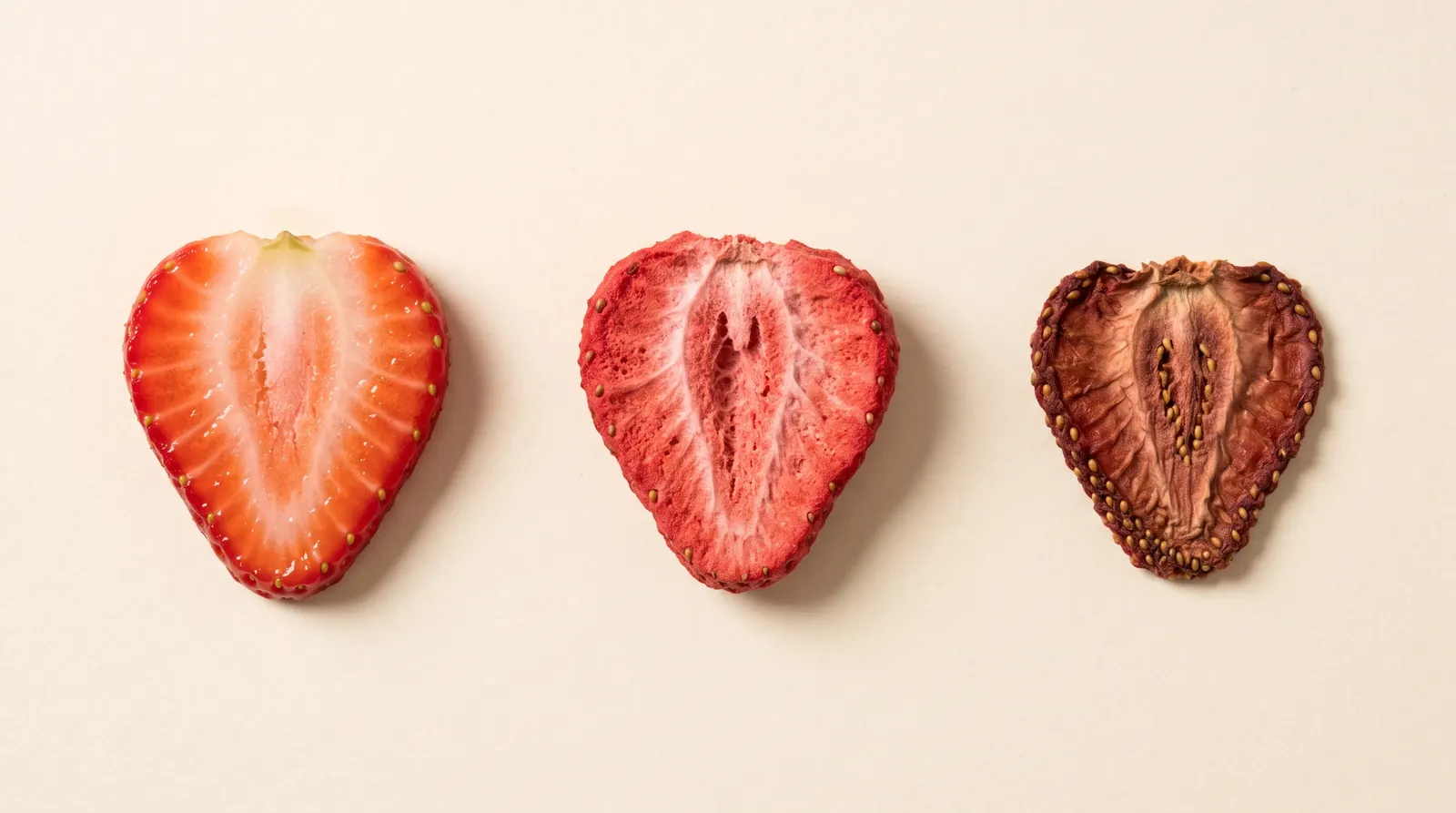
At the market, the question we hear most is some version of “Isn’t that just dried fruit?” It isn’t, and the difference is easy to see once you put the two side by side.
Both methods take the water out of fruit so it keeps without a fridge. They just do it in very different ways.
How dehydrating works
A dehydrator (or a low oven) blows warm air over the fruit for hours. The water slowly evaporates and the fruit shrinks as it dries.
Heat and time change the fruit along the way. Colours darken, sugars concentrate, and the texture turns chewy or leathery. Dehydrated fruit usually keeps somewhere around 5 to 20 percent of its water, which is why it bends instead of snapping.
How freeze-drying works
Freeze-drying starts by freezing the fruit solid. It then goes into a vacuum chamber, where the ice turns straight into vapour without melting first. Scientists call this sublimation. The machine adds a little gentle warmth to keep the process going, but the fruit is never cooked.
Because the water leaves while the fruit is frozen in place, the fruit keeps its shape. What’s left is the fruit’s own structure with tiny air pockets where the ice used to be. That’s what gives freeze-dried fruit its light, crisp crunch. Freeze-drying removes about 98 percent of the water, so a full tray of strawberries ends up weighing next to nothing.
Side by side
| Freeze-dried | Dehydrated | |
|---|---|---|
| Texture | Light and crunchy | Chewy or leathery |
| Colour and shape | Stays bright and keeps its shape | Darker and shrunken |
| Water removed | About 98% | Usually 80 to 95% |
| Heat | Frozen, never cooked | Hours of warm air |
| With water added | Plumps up in minutes | Stays chewy |
| Taste | Tastes like the fresh fruit | Concentrated and sweeter |
What about sugar?
A lot of store-bought dried fruit has sugar or preservatives added. Dried cranberries, for example, are almost always sweetened, and some dried fruit is treated with sulphites to hold its colour.
Our freeze-dried fruit is just fruit. The label on every bag says it plainly: no sugar added, made in small batches in our licensed kitchen. Freeze-drying can’t add flavour, so what you taste is the fruit we started with. That’s why we only freeze-dry Ontario produce picked at peak ripeness, including apples and pears from our own family farm.
Keeping it crunchy
Freeze-dried fruit’s only enemy is moisture. Keep the bag sealed between handfuls and store it somewhere cool and dry. If a bag is left open on a humid day, the fruit will soften. It’s still perfectly good, just less crisp.
Which one should you buy?
If you like chewy fruit in trail mix, dehydrated fruit is great. If you want something that tastes like a fresh strawberry and crunches like a chip, try freeze-dried. Our six ways to use freeze-dried fruit has ideas for snacks, baking and drinks.